The metal fabrication industry increasingly depends on advanced equipment that delivers accurate cuts, reliable output, and flexible production capabilities. A metal fiber laser cutting machine helps manufacturers transform metal sheets into precisely shaped components using concentrated laser energy and computer-controlled cutting paths. From custom fabrication workshops to large manufacturing facilities, this technology supports efficient production across multiple industries while helping businesses meet changing customer requirements.
How Fiber Laser Cutting Works
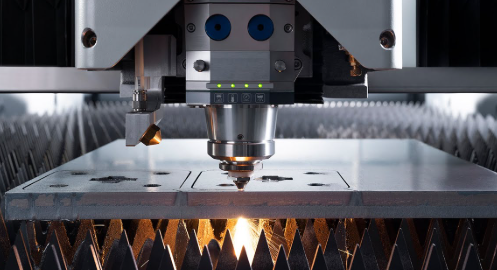
A fiber laser cutting machine produces a concentrated beam of light that is directed toward the metal surface through an optical system. The energy heats the material until it melts or vaporizes along the selected cutting path. An assist gas removes molten material from the cut, helping create the desired shape and edge.
Industrial machines commonly use computer numerical control (CNC) systems to follow digital drawings. Once a design is programmed, the machine moves its cutting head according to specified coordinates, allowing operators to manufacture components with straight edges, intricate curves, holes, and complex outlines.
Fiber laser technology can process materials such as carbon steel, stainless steel, aluminum, brass, and other suitable metals, depending on the machine’s specifications. Cutting performance varies according to material composition, thickness, laser power, assist gas, and operating parameters.
Advantages of Metal Fiber Laser Cutting Machines
High Precision and Repeatability
Manufacturers often need components that fit accurately during assembly. Fiber laser cutting can produce detailed shapes and narrow cutting paths, supporting precise fabrication. When the machine is correctly calibrated and operated with suitable settings, it can also produce consistent results across repeated production runs.
Increased Manufacturing Efficiency
Automated cutting reduces dependence on manual cutting and repetitive measuring tasks. Digital programming allows operators to switch between compatible designs without extensive mechanical tooling changes. This is particularly useful for manufacturers producing customized components or managing multiple orders.
Reduced Material Waste
Raw material costs can significantly affect manufacturing profitability. Nesting software arranges multiple part designs across a sheet to use available space efficiently. Better nesting can reduce scrap and improve material utilization, particularly when producing large quantities of components.
Flexible Production Capabilities
Fiber laser systems can handle a broad variety of component shapes and designs. Manufacturers can adjust cutting programs to accommodate new product specifications, prototypes, and short production runs. This flexibility helps businesses respond to changing customer demands without redesigning their entire manufacturing process.
Cleaner Cutting Results
With appropriate machine settings, fiber laser cutting can produce edges that require less additional finishing than some conventional methods. However, the final result depends on the material, thickness, cutting parameters, and quality requirements. Sample testing is recommended before beginning large-scale production.
Industrial Applications of Fiber Laser Cutting
Fiber laser cutting technology supports many industries that rely on accurately manufactured metal parts.
Automotive manufacturing: Cutting brackets, mounting plates, panels, and other components used in vehicle production and assembly.
Construction and infrastructure: Producing connection plates, metal supports, structural components, and customized architectural parts.
Electrical equipment: Manufacturing control cabinets, enclosures, equipment housings, and mounting panels with accurately positioned openings.
Agricultural machinery: Creating machine frames, protective covers, brackets, and replacement components from compatible metals.
Furniture and interior design: Producing decorative screens, shelving, metal furniture frames, and customized design elements.
General metal fabrication: Supplying components for machinery, industrial equipment, commercial products, and specialized manufacturing projects.
The machine’s versatility makes it useful for both standardized production and projects requiring custom dimensions or complex shapes.
See also: Why Attack Surface Management Matters for Modern Businesses
Choosing the Right Machine for Your Business
Selecting appropriate equipment begins with understanding the materials and components your business processes most frequently.
First, identify the types of metal you cut and the thickness range required. A workshop specializing in thin stainless steel sheets may need a different configuration from a factory producing heavy carbon steel components.
Next, evaluate laser power and expected production volume. Higher power can improve cutting capacity under suitable conditions, but the most powerful machine is not automatically the best investment. Compare performance requirements with purchase costs and ongoing operating expenses.
The working area is another important consideration. Ensure that the cutting bed accommodates your typical sheet dimensions and provides practical access for loading and unloading materials.
Also examine CNC software, cutting-head quality, cooling systems, electrical requirements, and compatibility with existing production equipment. Supplier support matters as well. Ask about installation, operator training, warranty coverage, replacement parts, and maintenance assistance.
HS Laser offers industrial laser equipment for manufacturing applications. Businesses considering its metal fiber laser cutting machine range should review available specifications and request sample cutting tests using their actual materials before selecting a configuration.
Maintenance and Workplace Safety
Regular maintenance helps preserve cutting quality and reduce unplanned downtime. Follow the manufacturer’s recommendations for inspecting protective lenses, cutting nozzles, cooling systems, optical components, and electrical connections. Clean working areas and properly maintained assist-gas supplies also contribute to reliable operation.
Laser cutting requires appropriate safety measures, including suitable protective enclosures, interlocks, warning indicators, and effective extraction of smoke and airborne particles where necessary. Protective eyewear must be appropriate for the system’s laser wavelength and operating conditions. All operators should receive relevant training.
Conclusion
A metal fiber laser cutting machine offers manufacturers an effective way to improve precision, automate fabrication, and make better use of raw materials. Its flexibility supports applications across automotive, construction, electrical, agricultural, and general manufacturing industries. By evaluating cutting requirements, machine specifications, operating expenses, safety measures, and technical support, businesses can choose equipment that supports dependable production and sustainable growth.