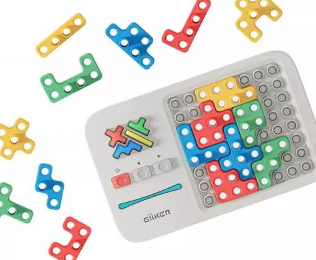
In an age when children have access to countless digital distractions, handheld puzzle games provide an engaging way to combine entertainment with active thinking. Unlike passive activities, puzzle games encourage children to make decisions, test ideas, recognize patterns, and work toward solutions. Their compact design also makes them convenient for home, school, travel, and quiet playtime.
What Are Handheld Puzzle Games?
Handheld puzzle games are portable activities designed to challenge the mind through logic, strategy, memory, spatial awareness, or problem-solving. They come in many forms, including sliding puzzles, maze games, number challenges, matching games, and electronic brain-training toys.
Their biggest advantage is that they encourage active participation. Instead of simply watching a screen, children physically interact with the puzzle and see how their decisions affect the outcome. This hands-on approach can make learning feel more like play than formal instruction.
Research and educational resources commonly associate puzzle activities with skills such as spatial reasoning, concentration, problem-solving, and persistence.
How Puzzle Games Encourage Logical Thinking
A good puzzle requires players to think before making a move. Children need to examine the current situation, consider possible actions, and predict what may happen next.
This process naturally introduces basic logical reasoning. If one piece is moved, another space becomes available. If a particular move creates a problem, the child can reconsider the strategy and try something different.
Over time, these repeated decisions can encourage children to approach challenges more systematically. Instead of immediately asking for an answer, they learn to experiment, observe results, and find solutions independently.
Building Concentration and Patience
Some puzzles can be solved within minutes, while others require considerably more effort. This makes them useful for practicing sustained attention.
When children encounter a difficult challenge, they have an opportunity to develop patience. They may need to repeat certain moves, remember previous attempts, and avoid giving up after an unsuccessful strategy.
The satisfaction of finally completing a puzzle can also provide a sense of achievement. This can encourage children to approach future challenges with greater confidence and persistence.
The Electronic Huarong Road Experience
One example of a modern handheld puzzle is Smart Tomato’s DD-03 Electronic Huarong Road. It combines the classic Huarong Road sliding-puzzle concept with electronic interaction and is designed for children aged 3–12. The product includes 500 built-in levels that progress from easier to more challenging puzzles.
The objective is to move differently shaped blocks and guide the large red piece toward the target position. Players therefore need to consider the position of multiple pieces and plan their movements carefully.
The product also includes a clearance sensor and sound-and-light feedback. Timing and challenge modes give players additional ways to approach the puzzles and encourage them to improve their solutions.
A Screen-Free Alternative for Children
One useful characteristic of handheld puzzle toys is their ability to provide interactive entertainment without relying on conventional mobile screens. The Smart Tomato Electronic Huarong Road is described as a screen-free interactive puzzle with electronic feedback.
This format can be useful for parents who want to introduce more hands-on activities into a child’s daily routine. Rather than consuming video content, children actively manipulate the puzzle and remain involved in solving the challenge.
Portable Entertainment for Home, School, and Travel
Portability is another reason handheld puzzles remain popular. A compact game can easily become part of a child’s travel bag, classroom activity collection, or home learning environment.
The DD-03 has a compact design and is intended for use at home, school, or while traveling. Its physical controls and durable construction make it suitable for repeated hands-on play.
This versatility makes handheld puzzle games useful not only for families but also for educators, activity centers, toy retailers, and educational product businesses.
What Should You Look for in a Puzzle Game?
When selecting a handheld puzzle, consider the child’s age and current abilities. A puzzle should provide enough difficulty to encourage thinking while remaining achievable with patience and practice.
Other factors worth considering include durability, portability, number of challenges, ease of use, and whether the game provides useful feedback. Progressive difficulty can be particularly valuable because children can start with simpler challenges and gradually work toward more complex ones.
For businesses, customization can also be important. Smart Tomato offers OEM/ODM options for the DD-03, including branding, packaging, color schemes, puzzle design, and certain electronic features.
See also: Why Attack Surface Management Matters for Modern Businesses
Conclusion
Handheld puzzle games offer more than simple entertainment. They give children opportunities to practice logical thinking, problem-solving, concentration, patience, and spatial awareness while enjoying an engaging hands-on activity.
Modern electronic puzzles such as the Smart Tomato Electronic Huarong Road show how a traditional logic challenge can be combined with interactive technology and progressive levels. Whether used at home, in educational settings, during travel, or as part of a toy product line, handheld puzzles can make problem-solving an enjoyable part of everyday play.